

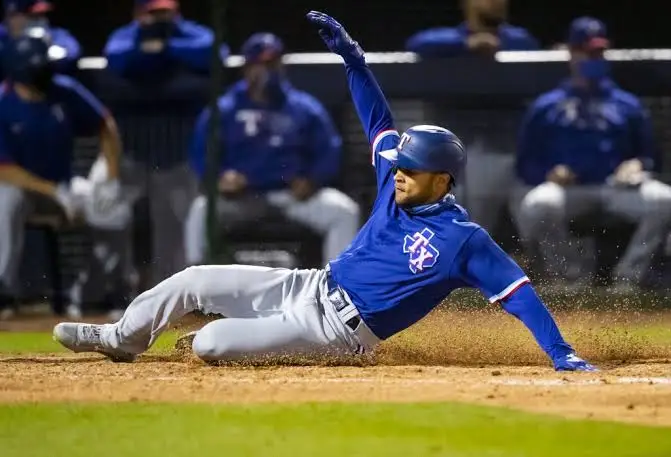
The first time I stood in against a real big-league arm, I wasn’t scared of getting hurt. I was scared of failing where everyone could see it.
That fear doesn’t go away when you make the majors. If anything, it gets louder. There are more people watching, more on the line, and a very public number next to your name that goes down every time you don’t get a hit. I lived inside that number for parts of three seasons with the Pittsburgh Pirates and Texas Rangers, and it taught me something I now build our entire program around: the players who last aren’t the ones who avoid failure. They’re the ones who learn to keep swinging through it.
Failure Is the Curriculum
We tell parents this at their very first conversation with us, because it reframes everything that follows. Baseball is a game built on failing more than you succeed. It is the only sport where doing your job three times out of ten makes you an all-star.
A Hall of Fame Career: Hit .300 and you’re one of the best on Earth. That’s still making an out seven times out of ten.
When a 13-year-old strikes out and slumps back to the dugout like the world ended, he’s not being dramatic. nobody has taught him that the failure is the point. So that’s where we start. Not with mechanics. With permission to fail, and a plan for what to do next.
We’re not teaching kids to avoid failure. We’re teaching them to survive it, and step back in the box.
What This Looks Like at 13U
It’s easy to say “embrace failure” on a poster. It’s harder to coach it on a Tuesday night when a kid is 0-for-3 and fighting back tears. Here’s what we actually do differently:
- We praise the at-bat, not the result. A tough nine-pitch walk gets more from us than a lucky bloop single.
- We give every player a reset routine. A physical, repeatable way to let go of the last pitch before the next one.
- We keep our own body language flat after a strikeout. Kids read the dugout before they read the scoreboard.
- We talk openly about our own failures, mine included. It’s hard to be ashamed of striking out when your coach struck out in front of 40,000 people.
The irony is that this is also how you build better hitters. A player who isn’t terrified of two strikes will take a better swing than one who’s just trying not to look bad. Confidence isn’t the absence of failure, it’s the belief that you’ll be fine on the other side of it.
I got to experience the other side, too. Every so often it all lines up, and you run into one. Mine came in 2021. A two-run shot to right-center off a guy named Shohei Ohtani, who’d go on to be the unanimous MVP that year. But I promise you, that swing was only possible because of the thousand times before it that didn’t work. That’s the deal this game offers every player who’s willing to take it. We just make sure our Lions know the deal going in.